Skip to content
Wade HarlanHouse Sense Library

Three practical field guides by Wade Harlan

Read the evidence before you spend on repairs

Start with the symptom, record what changed, and ask the next useful question without pretending to diagnose the house.

Wade Harlan

Three guides for the next decision about your house. Explore the books and their actual pages below.

PDF + EPUB access through Whop · 30-day money-back guarantee · One payment, no subscription

3 Books · 334 PDF pages · 33 Chapters · 13 Tables · 9 Checklists · 20 Glossary terms

3Books
334PDF pages
$27One payment, no subscription
3030-day money-back guarantee

House Sense Library

The symptom is real; the conclusion may not be

A house gives you evidence in pieces. The useful first move is to record the piece in front of you, judge its urgency, and find out what the next professional should be able to prove.

  • A switch plate feels warm, a breaker trips again, or the lights dim when equipment starts. You need to know whether to monitor it, stop using the equipment, call today, or leave the area.
  • One drain slows, then the toilet begins to gurgle. The number and location of affected fixtures may tell you more than the noise, but they do not justify guessing at the failed part.
  • A repair proposal names equipment and a total but leaves out measurements, permits, restoration, exclusions, or the evidence connecting the work to the problem.
  • An outlet tester, moisture meter, thermal image, crack monitor, or old pipe gives you a clue. You need to know what that clue can establish—and what remains unknown.
Get the complete library $27

PDF + EPUB access through Whop · 30-day money-back guarantee · One payment, no subscription

The books

House Sense Library

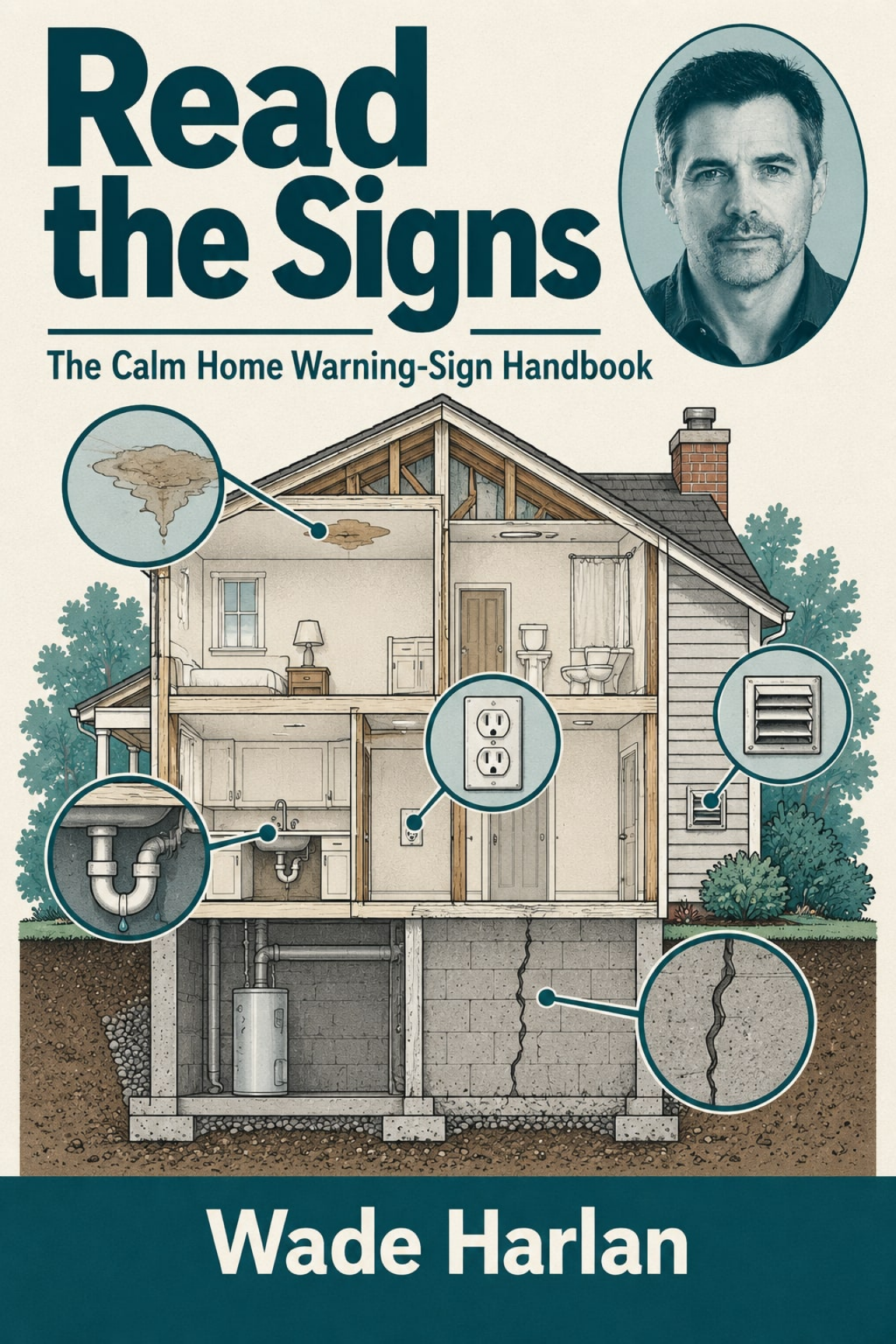
Read the Signs

The books / 01

Read the Signs

The Calm Home Warning-Sign Handbook

Describe the sign first: where it is, when it happens, what was operating, and whether it is changing.

Read the Signs is the 107-page starting point for a symptom you can see, hear, smell, or feel. Its 10 chapters cover electrical warnings, water pressure and leaks, drains and sewers, water heaters, foundations, roofs, heating and cooling, moisture, and gas signs. Begin with “First, Decide How Urgent It Is,” then use the four urgency levels to choose an observable next action. Diagrams explain water routes, drain-and-vent systems, forced-air equipment, and visible electrical clues without sending you inside hazardous equipment. The closing chapter provides a who-to-call chart, a phone-script pattern, and an appointment checklist built around dated photographs and specific conditions.

Selected chapters

  1. First, Decide How Urgent It Is
  2. Electrical Signs: Heat, Noise, Odor, and Lost Power
  3. Water-Supply Signs: Pressure, Leaks, Color, and Sound
  4. Drain and Sewer Signs: When Water Will Not Leave Normally
  5. Water-Heater Signs: Leaks, Noise, Temperature, and Combustion
  6. Basement and Foundation Signs: Movement, Cracks, and Water
  7. Roof, Attic, and Exterior Signs: The Path Water Takes
  8. Heating and Cooling Signs: Comfort Problems with Mechanical Causes
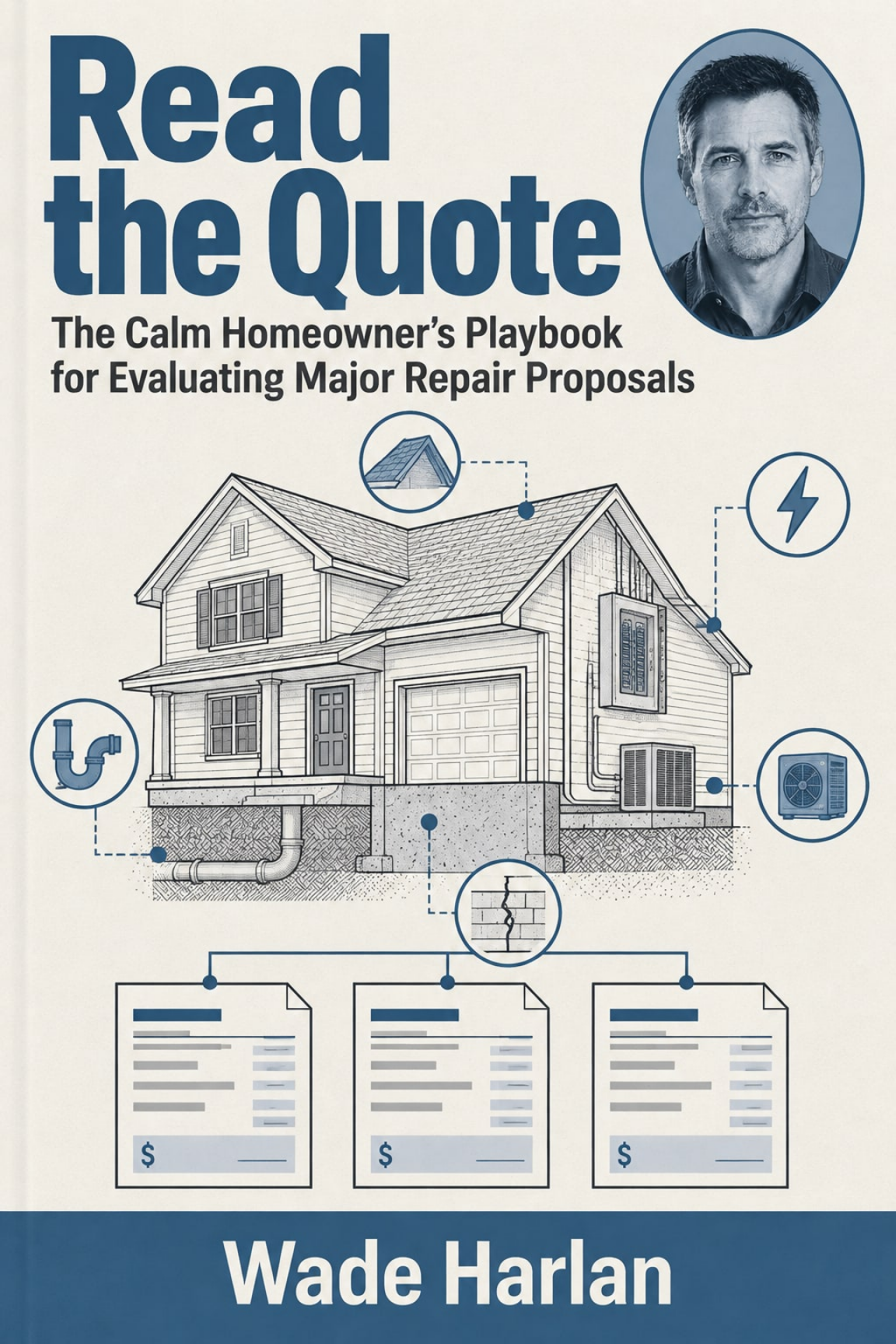
Read the Quote

The books / 02

Read the Quote

The Calm Homeowner’s Playbook for Evaluating Major Repair Proposals

A sound quote connects evidence to a diagnosis, the diagnosis to a recommendation, and the recommendation to a defined scope.

Read the Quote is a 114-page playbook for examining a major repair proposal before you sign it. Across 12 chapters, it separates observation, diagnosis, recommendation, and priced scope so you can see whether each claim supports the next. Specific chapters examine basement waterproofing, foundation repair, crawl-space encapsulation, mold work, electrical proposals, sewer lines, HVAC replacement, roofing, and water heaters. A three-bid ledger helps align quantities, specifications, allowances, exclusions, permits, restoration, payment terms, and warranties. Use it when two bids appear similar but include different work—or when a confident recommendation arrives without measurements, photographs, test results, or a clearly stated objective.

Selected chapters

  1. What a Large Quote Should Prove
  2. Basement Waterproofing: Follow the Water Path
  3. Foundation Repair: Define the Movement and the Goal
  4. Crawl-Space Encapsulation: Know What the New Boundary Includes
  5. Mold Work: Separate Moisture, Removal, and Verification
  6. Electrical Proposals: Ask What Requires Replacement and Why
  7. Sewer Line Work: Locate the Defect Before Pricing the Cure
  8. HVAC Replacement: Compare the System, Not Just the Box
Read the House

The books / 03

Read the House

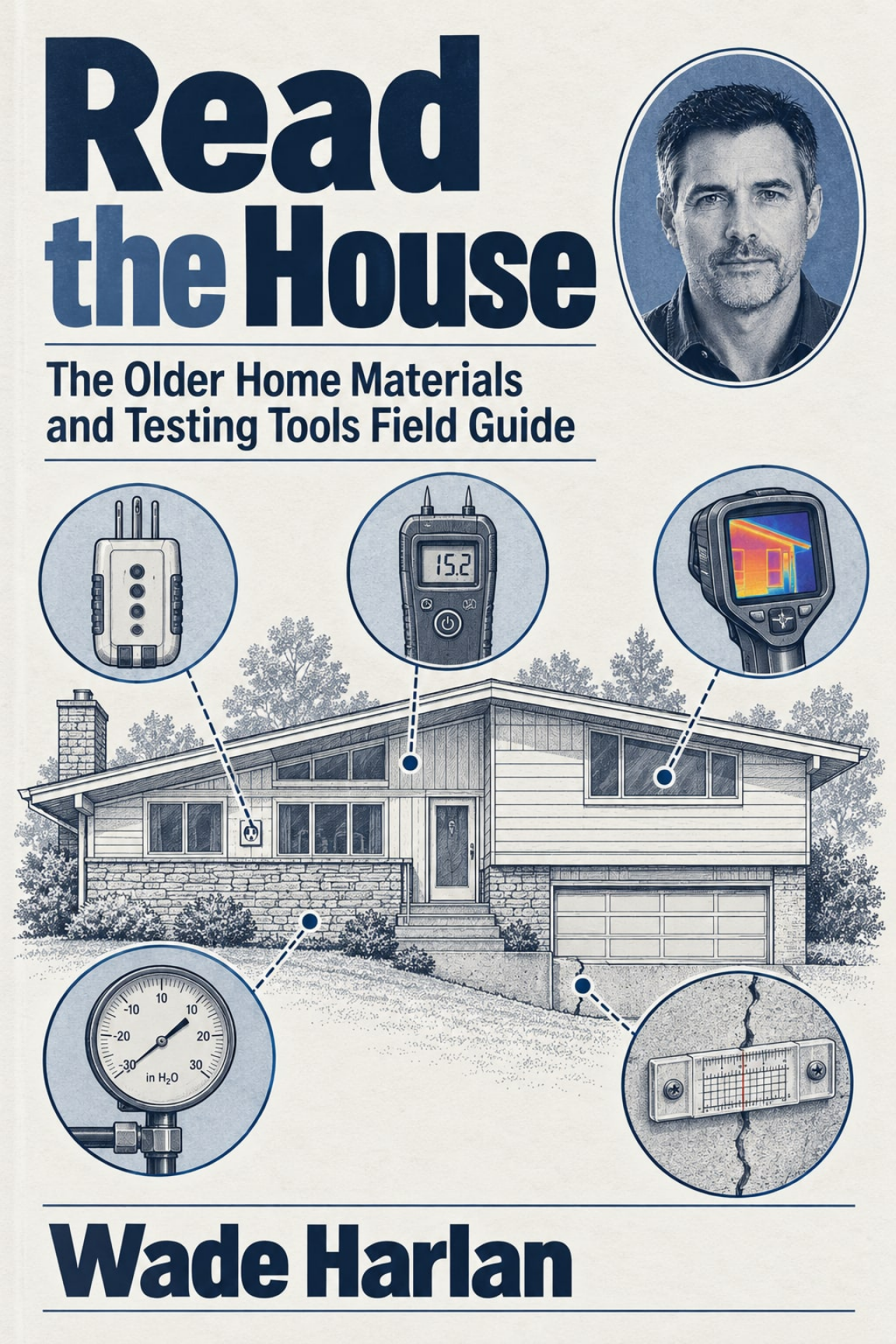
The Older Home Materials and Testing Tools Field Guide

A visible feature or device reading can narrow the question, but it rarely names the cause by itself.

Read the House is a 113-page field guide to older materials and common homeowner testing tools. Its 11 chapters show how building era, visible wiring, receptacle faces, supply pipes, drain materials, old coatings, and insulation clues can narrow a question without settling it. The tool chapters cover outlet testers, voltage detectors, breaker finders, moisture meters, hygrometers, thermal cameras, alarms, kits, gauges, and monitors. Comparison tables identify what each device senses, what can interfere, and what it cannot diagnose. The final house-reading record gives you one place to note the date, conditions, device model, result, comparison reading, uncertainty, urgency, professional called, and questions still unanswered.

Selected chapters

  1. Evidence, Not a Verdict
  2. What the Building Year Can—and Cannot—Tell You
  3. Older Wiring Without Opening Anything
  4. What an Outlet Face Really Proves
  5. Supply Pipes: A House Can Have More Than One Generation
  6. Drain and Vent Materials Leave a Record
  7. Lead, Asbestos, and the Materials You Do Not Disturb
  8. Before You Trust Any Home Tool
Get the complete library $27

PDF + EPUB access through Whop · 30-day money-back guarantee · One payment, no subscription

Selected chapters

Use the book that matches the decision in front of you

You do not need to read the library straight through. Start with the stage you have reached: noticing a symptom, reviewing proposed work, or interpreting an older-house clue or tool reading.

  1. A sign has appeared

    Open Read the Signs. Record where the symptom appears, when it began, what equipment or weather was involved, and whether heat, odor, water, movement, or lost operation changes the urgency.

  2. A proposal is on the table

    Open Read the Quote. Mark the stated evidence, diagnosis, scope, allowances, exclusions, permits, restoration, payment terms, and warranty before comparing the total with another bid.

  3. A material or reading is unclear

    Open Read the House. Identify what the visible clue or device actually senses, note the conditions around it, make a comparison where safe, and write down what still requires qualified evaluation.

Get the complete library $27

PDF + EPUB access through Whop · 30-day money-back guarantee · One payment, no subscription

Look inside

Open a page and read it

The three covers and interior previews let you inspect the books before buying. Look for plain-language explanations, numbered diagrams, ruled comparison tables, urgency guidance, checklists, decision paths, and firm boundaries around electricity, gas, refrigerant, contaminated water, unstable structures, roofs, attics, and crawl spaces.

3 Books · 334 PDF pages · 33 Chapters · 13 Tables · 9 Checklists · 20 Glossary terms

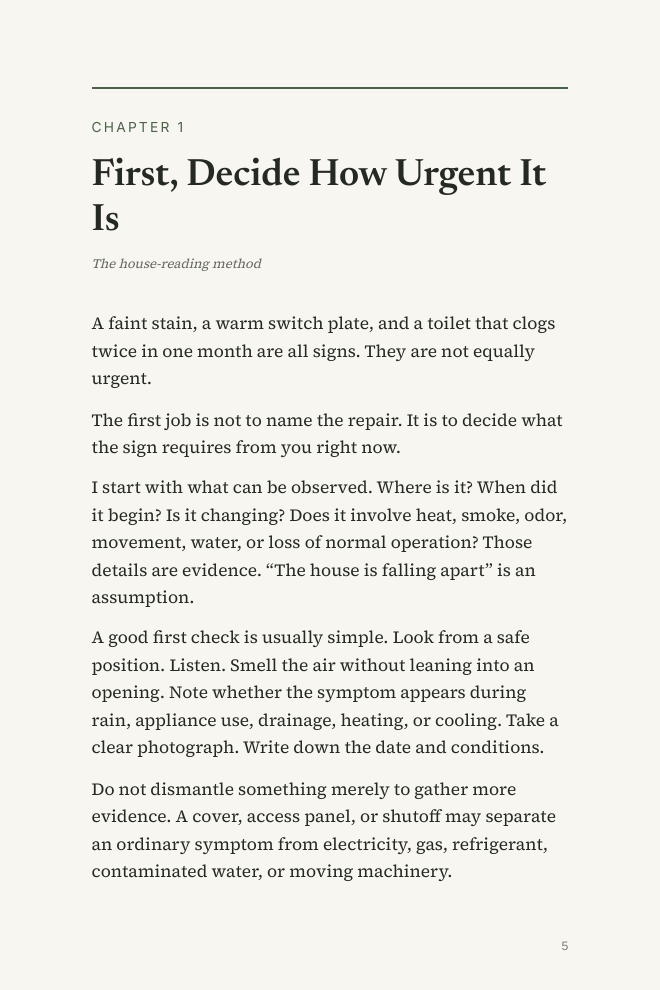
Page 5 — First, Decide How Urgent It Is
Page 5 — First, Decide How Urgent It Is ↗
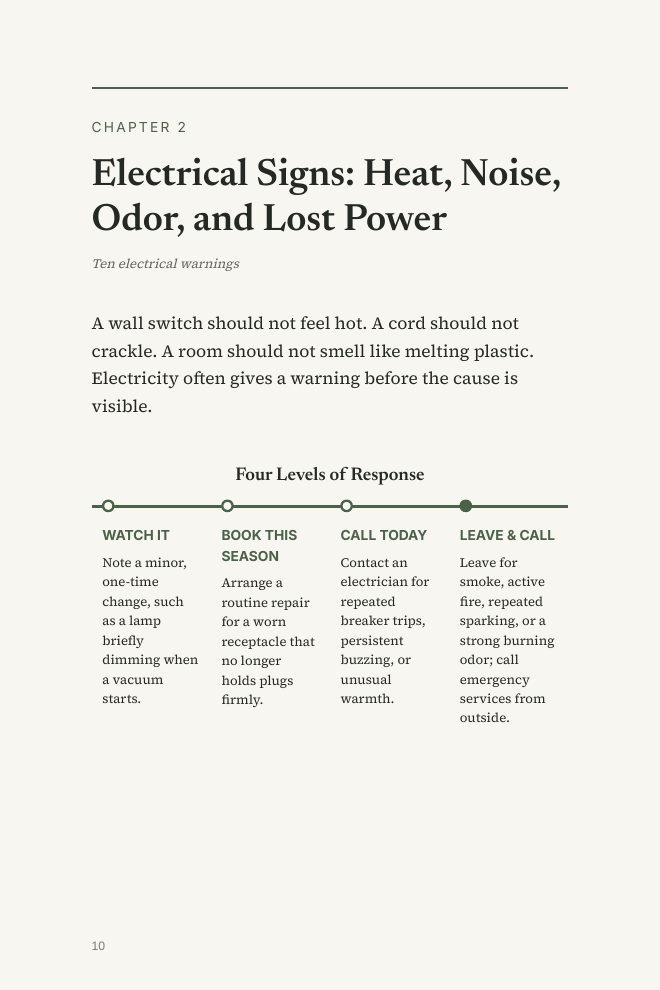
Page 10 — Electrical Signs: Heat, Noise, Odor, and Lost Power
Page 10 — Electrical Signs: Heat, Noise, Odor, and Lost Power ↗
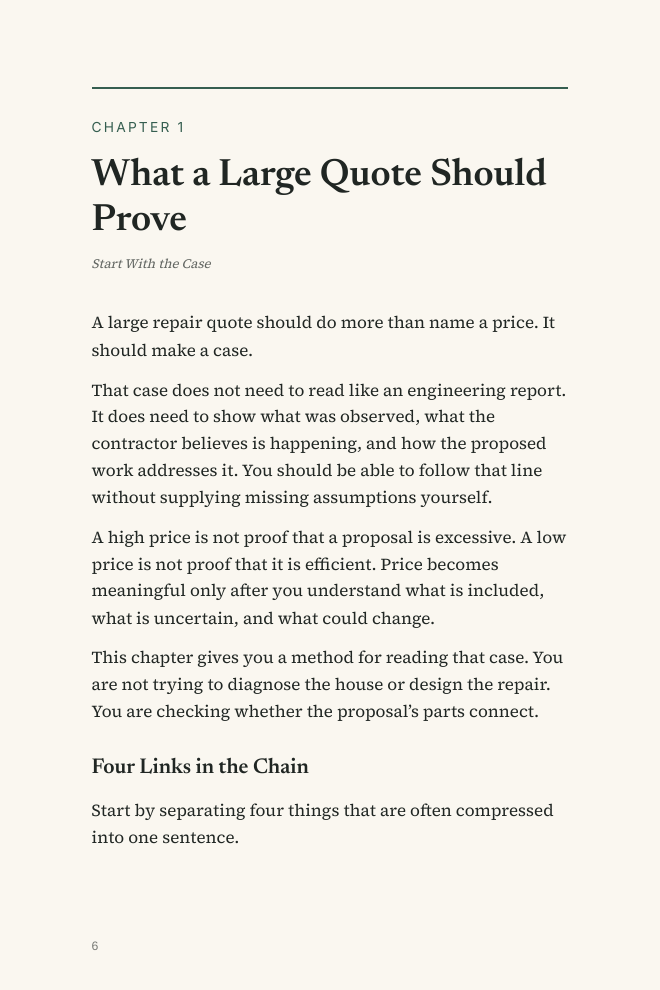
Page 6 — What a Large Quote Should Prove
Page 6 — What a Large Quote Should Prove ↗
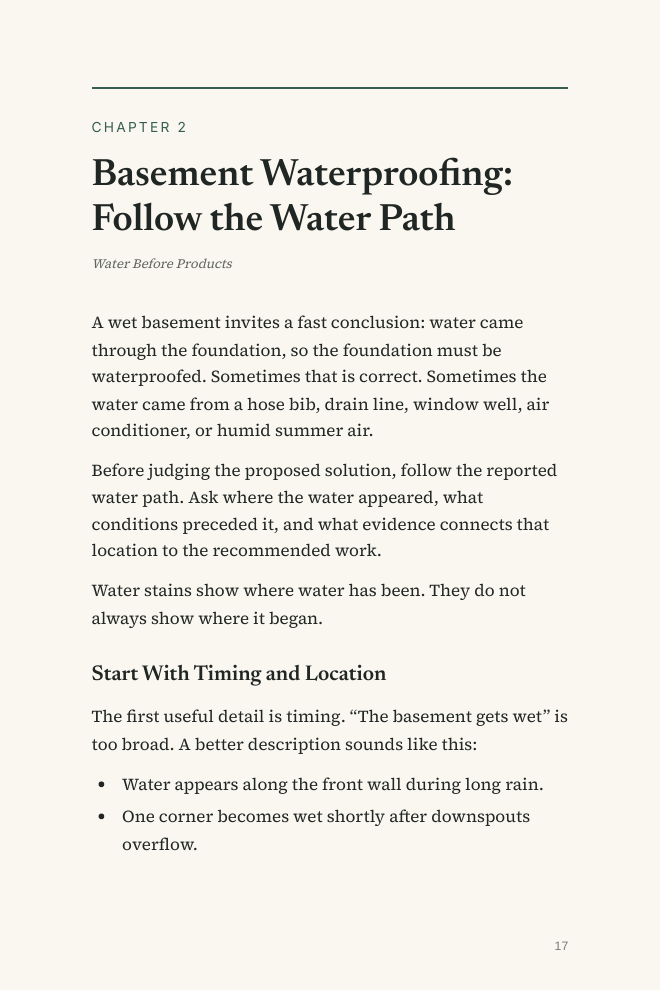
Page 17 — Basement Waterproofing: Follow the Water Path
Page 17 — Basement Waterproofing: Follow the Water Path ↗
Get the complete library $27

PDF + EPUB access through Whop · 30-day money-back guarantee · One payment, no subscription

What you get

A clearer decision before you spend

The complete House Sense Library includes Read the Signs, Read the Quote, and Read the House. Together, the books help you describe a recurring symptom, ask for evidence and written scope in a repair proposal, and recognize the limits of an older-home clue or tool reading.

Read the SignsRead the QuoteRead the House

Your order

The House Sense Library

$27

3 ebooks · PDF + EPUB · 334 PDF pages · 33 chapters

3 Books · 334 PDF pages · 33 Chapters · 13 Tables · 9 Checklists · 20 Glossary terms

  • Read the Signs · 107 PDF pages · PDF + EPUB
  • Read the Quote · 114 PDF pages · PDF + EPUB
  • Read the House · 113 PDF pages · PDF + EPUB
  • All three English-language ebooks in PDF and EPUB: six files, with 334 pages across the PDF editions. After purchase, sign in to Whop to download the library and read it on your phone, tablet, or computer. No physical books are shipped.
Get the complete library $27

PDF + EPUB access through Whop · 30-day money-back guarantee · One payment, no subscription

Wade Harlan

From Wade

I start with what the house is actually doing

I write for the moment when something in the house changes and you are not yet sure what it means. Maybe a drain keeps slowing, an appliance has started making a new noise, a wall crack looks different, or a contractor has handed you a proposal full of unfamiliar terms. I begin with the evidence: location, timing, weather, equipment use, odor, heat, water, sound, movement, and loss of normal operation.

My aim is not to turn you into the person opening panels, adjusting gas equipment, disturbing old materials, or declaring a diagnosis from one reading. It is to help you take a clear photograph, keep a useful record, choose the right kind of professional, and ask focused questions. A calm decision still allows for uncertainty; it simply makes that uncertainty visible before work begins.

— Wade Harlan

Get the complete library $27

PDF + EPUB access through Whop · 30-day money-back guarantee · One payment, no subscription

30-day money-back guarantee

Read it and put it to use. If it is not right for you, request your refund within 30 days.

Read The House Sense Library for 30 days. If the books are no use to you, use the support form within 30 days of purchase for a full refund, no questions asked. You keep the downloaded files.

No questions asked

Get the complete library $27

PDF + EPUB access through Whop · 30-day money-back guarantee · One payment, no subscription

This is for you if

Who I wrote this for

This is for you if

  • You own or look after a house and want a repeatable way to document recurring clogs, leaks, odors, electrical warnings, comfort problems, cracks, stains, and unusual equipment behavior.
  • You have received a substantial repair proposal and want to ask for supporting evidence, a written scope, named exclusions, permit responsibility, and a clear change-order process.
  • You live with older materials or use common home-testing devices and want to separate an observation, a screening result, an inspection, a test, and a diagnosis.
  • You prefer calm explanations, practical records, and clear safety boundaries over sales pressure or certainty the evidence cannot support.
Get the complete library $27

PDF + EPUB access through Whop · 30-day money-back guarantee · One payment, no subscription

What you can work toward

What you can work toward

AI-generated illustrations of potential readers.

Make a useful first call

Turn “something is wrong” into a short account of the affected room, timing, operating conditions, spread, visible evidence, and immediate hazards. Then call the appropriate trade with questions worth answering.

AI-generated illustrations of potential readers.

Compare the work, not just the totals

Place bids beside one another and align their diagnosis, quantities, materials, permits, exclusions, restoration, schedule, payments, and warranties before deciding whether they describe the same job.

AI-generated illustrations of potential readers.

Use household tools without overreading them

Understand what an outlet tester, moisture meter, hygrometer, thermal camera, alarm, gauge, or monitor can indicate, then preserve the reading and identify the professional follow-up it cannot replace.

AI-generated illustrations of potential readers.

Get the complete library $27

PDF + EPUB access through Whop · 30-day money-back guarantee · One payment, no subscription

House Sense Library

Questions

How do the three books fit together?

Start with Read the Signs when a symptom appears. Use Read the Quote when a contractor proposes work. Open Read the House when older materials or a testing-tool reading raise questions. You can start with the decision in front of you rather than read all three books in order.

Do I need repair or construction experience?

No. The books define technical terms in homeowner language and begin with observations you can make from a safe position. They are organized to help you describe a condition and prepare better questions, not to test whether you already know trade vocabulary.

What subjects are covered across the three books?

The library covers electrical signs, water supply, drains and sewers, water heaters, foundations, basements, roofs, heating and cooling, indoor air, moisture, gas warnings, major repair proposals, older wiring and pipes, suspect materials, and common homeowner testing devices.

Do the books tell me how urgent a symptom is?

Read the Signs uses four urgency levels and looks at observable factors such as heat, smoke, odor, active water, structural change, contamination, and loss of normal operation. It also identifies conditions that call for emergency services, a utility, or a qualified professional.

Will these books teach me to carry out the repairs?

Their central job is to help you observe, document, judge urgency, evaluate evidence, and make the right call. The safety guidance repeatedly keeps readers out of electrical panels, gas and refrigerant work, unstable spaces, suspect old materials, and other conditions that require qualified evaluation.

Which file formats are included?

Each of the three ebooks comes in PDF and EPUB format: six files in total. The PDF editions contain 334 pages across 33 chapters. EPUB page counts vary with your device and reading settings.

How is the digital order delivered?

After payment, sign in to Whop with the email address used at checkout and open the Files area in Wade Harlan Homes. Download each book in PDF or EPUB and read it on your phone, tablet, or computer. No physical books are shipped.

What is the refund policy?

Read The House Sense Library for 30 days. If the books are no use to you, use the support form within 30 days of purchase for a full refund, no questions asked. You keep the downloaded files.

Get the complete library $27

PDF + EPUB access through Whop · 30-day money-back guarantee · One payment, no subscription

Start with the evidence you can honestly record

You do not need to name the failed part before making a sensible next move. Note the sign, preserve the conditions, judge the urgency, and ask the professional to show how the evidence supports the proposed work.

Get the complete library $27

PDF + EPUB access through Whop · 30-day money-back guarantee · One payment, no subscription